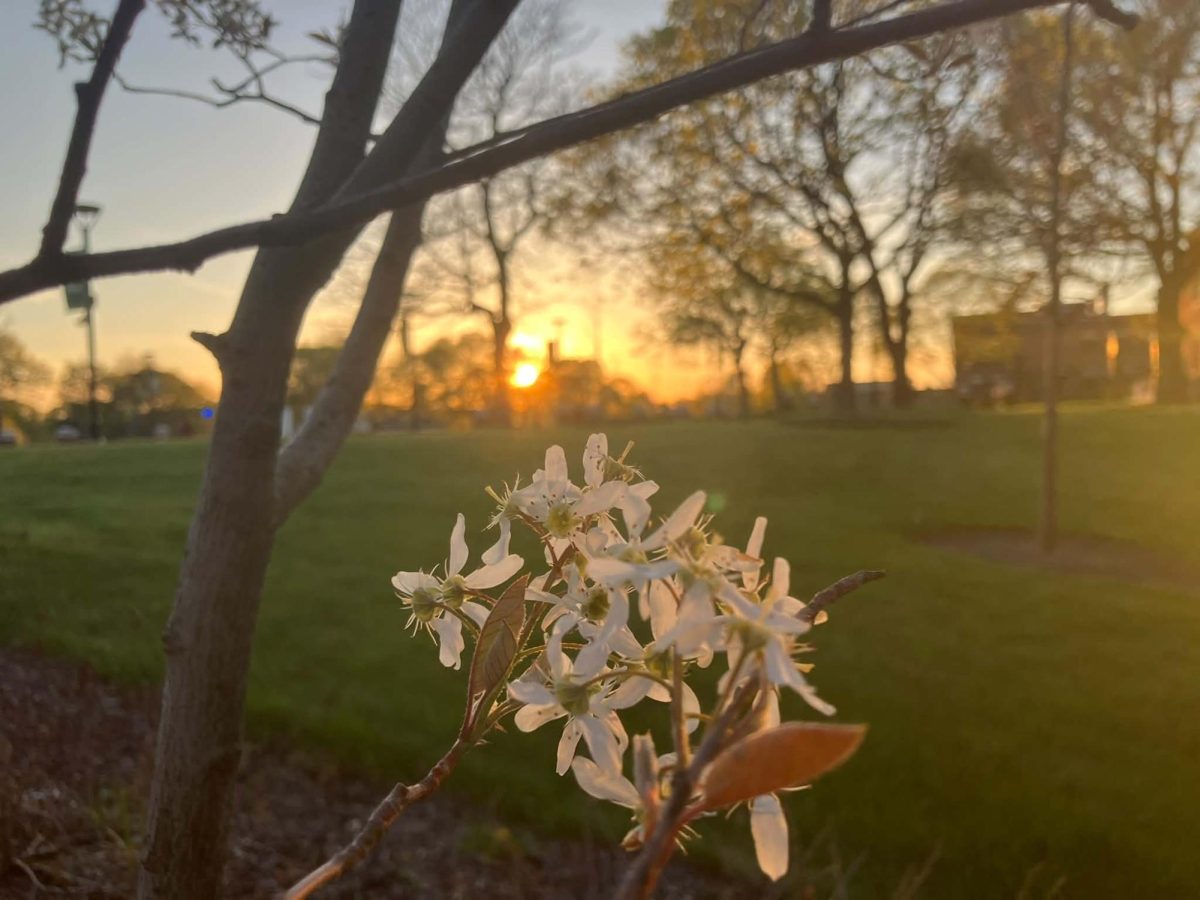
The short hike up the steep hill toward Grewen Hall, surrounded by tall grass, is a daily experience for numerous students and faculty members at Le Moyne College. The college set this space aside, as well as other spaces like the field near St. Mary’s and the meadow by the Le Moyne Woods to be No-Mow-Zones. The No-Mow-Zones provide native species a space to flourish, live, and grow.
The best part is that members of the Le Moyne and Salt Springs communities get to watch the progress happen year by year, where these landscapes are often only mowed once.
The president of the Environmental Sustainability Club, Haylee Moore, mentioned that “Just recently, we were having our Spring Clean-Up and while walking around the Salt Springs neighborhood we were stopped by a couple of neighbors and they thanked us for taking the time to clean up the Earth.”
So, what can we do next?
Dr. Nell Champoux spoke on the matter of transforming college campuses back into sustainable, biodiverse ecosystems on their indigenous land. “We have a really important source of knowledge in the Onondaga Nation that’s right on our doorstep in Syracuse,” she said.
She also noted the importance of making conscious choices on the matter of food sustainability based on “how the food I consume relates to the natural environment.”
In light of today’s environmental struggle, Le Moyne College offers great opportunities for the growth of plants native to Upstate New York.
“In the future I’d love to see more projects that involve planting diverse, native trees around campus to support biodiversity. I’ve also had many conversations surrounding ways in which we can make our dining hall more sustainable,” says Moore.
What matters most is that students remain environmentally conscious around campus to ensure the best experience possible for not only themselves in their years here, but also for all the species that make our campus thrive.